

Last Updated on June 17, 2026
Imagine being the calm in a sudden emergency, knowing exactly what to do to keep yourself or someone else safe. Basic first aid survival skills are not just useful—they can be lifesaving.
Whether you’re at home, outdoors, or anywhere unexpected trouble strikes, having these skills gives you confidence and control. You’ll discover simple, clear steps to handle common emergencies quickly and effectively. Ready to empower yourself with knowledge that could make all the difference?
Keep reading, because what you learn here could save a life—maybe even yours.

Credit: www.illinoishealthcareers.com
Essential First Aid Supplies
Having the right first aid supplies helps you respond to injuries quickly. Basic supplies can treat many common wounds and emergencies.
A well-stocked first aid kit is important for homes, cars, and workplaces. It gives you peace of mind and can save lives.
Building A Basic First Aid Kit
Start with a sturdy container to keep your supplies safe. Choose a box or bag that is easy to carry and water-resistant.
Include essential items that cover cuts, burns, sprains, and minor illnesses. Keep things simple but useful.
- Adhesive bandages in various sizes
- Sterile gauze pads and adhesive tape
- Antiseptic wipes and antibiotic ointment
- Disposable gloves for hygiene
- Scissors and tweezers
- Elastic bandage for sprains
- Pain relievers like ibuprofen or acetaminophen
- Thermometer
- First aid manual or instruction booklet
Items For Common Emergencies
Prepare specific supplies for common emergencies you might face. Think about cuts, burns, allergic reactions, and breathing problems.
- Burn cream or aloe vera gel for burns
- Hydrocortisone cream for itching and rashes
- Antihistamine tablets for allergic reactions
- CPR face shield or mask
- Instant cold packs to reduce swelling
- Eye wash solution for eye injuries
- Emergency blanket to prevent shock
Storage And Maintenance Tips
Store your first aid kit in a cool, dry place away from sunlight. Make sure it is easy to find in an emergency.
Check your supplies regularly. Replace expired or used items to keep the kit ready at all times.
- Label the kit clearly
- Keep instructions and emergency numbers inside
- Clean and dry items before returning them to the kit
- Update the kit if your family’s needs change
Handling Common Injuries
Knowing basic first aid skills can help you act quickly during emergencies. Common injuries like cuts, burns, sprains, and fractures need proper care to prevent complications.
Learning how to handle these injuries can protect you and others until professional help arrives. Below are simple ways to treat these common injuries.
Treating Cuts And Scrapes
Clean the wound gently with clean water to remove dirt. Avoid using harsh chemicals or scrubbing hard.
Apply an antibiotic ointment to prevent infection. Cover the cut or scrape with a clean bandage to keep it protected.
- Wash your hands before treating the wound
- Stop bleeding by applying gentle pressure
- Keep the wound clean and dry
- Change the bandage daily or if it gets wet
- Watch for signs of infection like redness or swelling
Managing Burns And Scalds
Cool the burn under running cold water for 10 to 20 minutes. Do not use ice or very cold water as it may cause more damage.
Cover the burn with a clean, non-stick dressing or cloth. Avoid popping blisters to reduce infection risk.
- Remove tight clothing or jewelry from the burned area
- Do not apply creams or oils on fresh burns
- Take pain relief medicine if needed
- Seek medical help for large or deep burns
Dealing With Sprains And Fractures
Rest the injured limb and avoid moving it to prevent more damage. Use ice packs to reduce swelling and pain.
For fractures, immobilize the area with a splint or padding before getting medical help. Keep the injured part elevated if possible.
- Use a bandage or cloth to support the injury
- Do not try to realign bones yourself
- Apply ice wrapped in cloth for 15-20 minutes
- Seek emergency care for severe pain or deformity
Responding To Medical Emergencies
Medical emergencies can happen anywhere and anytime. Knowing what to do can save a life.
Basic first aid skills help you act quickly and confidently. This guide covers key survival skills.
Recognizing Signs Of Shock
Shock happens when the body does not get enough blood flow. It is a serious condition.
Look for pale skin, cold sweat, fast breathing, and weak pulse. The person may feel dizzy or confused.
- Cold, clammy skin
- Rapid, shallow breathing
- Weak, fast pulse
- Dizziness or fainting
- Confusion or anxiety
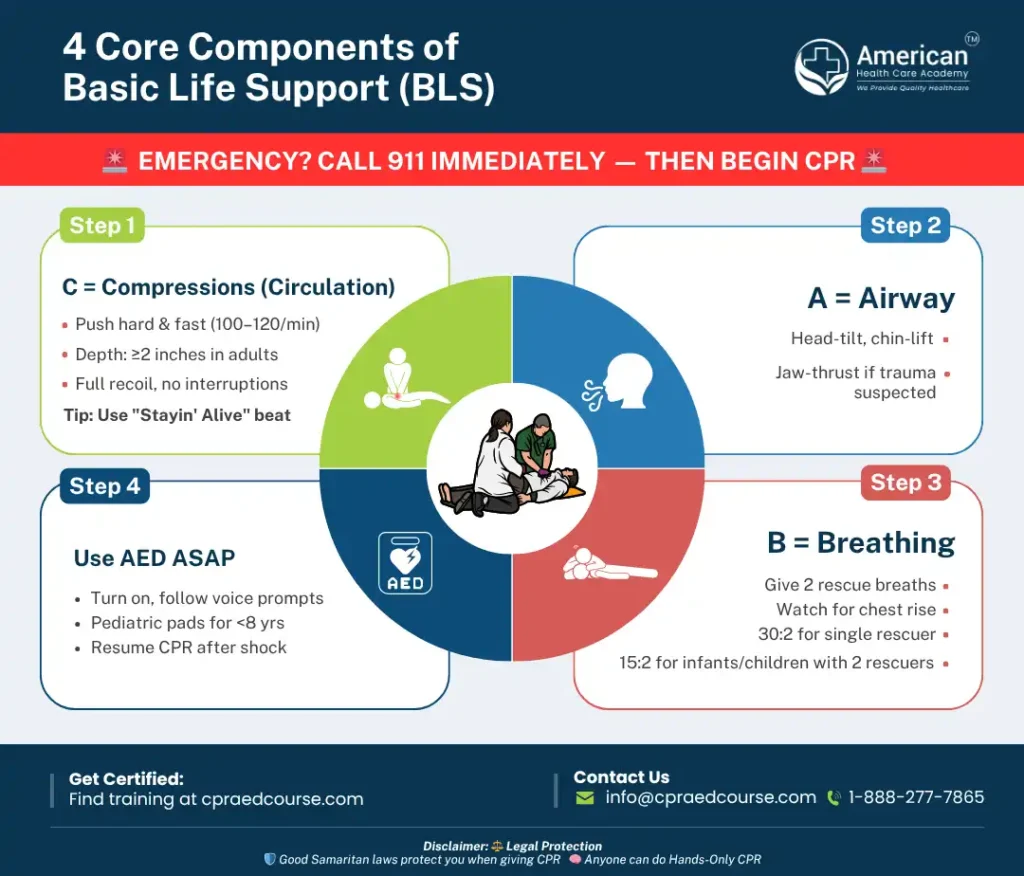
Performing Cpr Basics
CPR helps keep blood flowing to the brain and organs. It is critical if someone stops breathing.
Push hard and fast in the center of the chest. Give rescue breaths if you are trained to do so.
- Place hands in the middle of the chest
- Push down at least 2 inches
- Push at a rate of 100-120 compressions per minute
- Give 2 rescue breaths after 30 compressions (if trained)
- Continue until help arrives or the person moves
Dealing With Choking Incidents
Choking blocks the airway and stops breathing. Act quickly to clear the blockage.
Give back blows and abdominal thrusts to help remove the object. Call for help if needed.
- Ask the person to cough if they can
- Give 5 firm back blows between the shoulder blades
- Perform 5 abdominal thrusts if back blows fail
- Repeat until the object is out or the person can breathe
- Call emergency services if the person loses consciousness
Credit: cpraedcourse.com
Safety Precautions And Prevention
Knowing basic first aid survival skills helps keep you safe. It teaches you how to avoid injuries and handle emergencies.
Safety starts with prevention and understanding risks. Taking simple steps can stop many accidents before they happen.
Avoiding Common Hazards
Many injuries come from common hazards at home or outdoors. Spotting these dangers early lowers your risk of harm.
Keep your surroundings clean and organized. Remove objects that can cause trips or falls.
- Clear clutter from walkways
- Store sharp tools safely
- Keep fire exits free
- Use protective gear during activities
- Check for electrical hazards
When To Seek Professional Help
Some injuries need trained medical workers. Knowing when to call for help is very important.
Call emergency services if someone is unconscious or has heavy bleeding. Serious burns or broken bones also need expert care.
- Unconsciousness or difficulty breathing
- Severe bleeding that won’t stop
- Deep wounds or burns
- Suspected broken bones
- Signs of stroke or heart attack
Keeping Calm Under Pressure
Staying calm helps you think clearly during an emergency. Take deep breaths to reduce panic.
Focus on what you can do right now. Speak slowly and clearly if you call for help or give instructions.
- Pause and breathe deeply
- Assess the situation carefully
- Act with clear steps
- Keep your voice calm and steady
- Encourage others to stay calm too

Credit: www.amazon.com
Frequently Asked Questions
What Are The Essential Items In A First Aid Kit?
A first aid kit should include bandages, antiseptic wipes, gauze, adhesive tape, scissors, and gloves.
How Do You Treat A Minor Cut Or Scrape?
Clean the wound with water. Apply antiseptic. Cover with a bandage. Keep it dry.
What Should You Do For A Sprained Ankle?
Rest and elevate the ankle. Apply ice. Use a compression bandage to reduce swelling.
How Can You Recognize Signs Of Dehydration?
Signs include dry mouth, dizziness, fatigue, and dark urine. Drink water immediately.
What Steps Should You Take For Cpr?
Check responsiveness. Call for help. Start chest compressions. Give rescue breaths if trained.
Conclusion
Knowing basic first aid saves lives and reduces harm. Quick action helps in emergencies. Simple skills like cleaning wounds, stopping bleeding, and CPR make a big difference. Practice these skills often to stay ready. Keep a first aid kit nearby for easy access.
Teaching others can spread safety in your community. Stay calm and act confidently during accidents. Being prepared brings peace of mind. Start learning today to protect yourself and others tomorrow.