

Last Updated on June 17, 2026
Wildfires can start suddenly and spread quickly, putting your life and home at risk. Are you truly ready if flames come your way?
Taking a few simple steps now can make all the difference when every second counts. You’ll discover easy-to-follow wildfire emergency preparedness tips that help protect you, your family, and your property. Don’t wait until it’s too late—read on to learn how to stay safe and act fast when wildfire strikes.
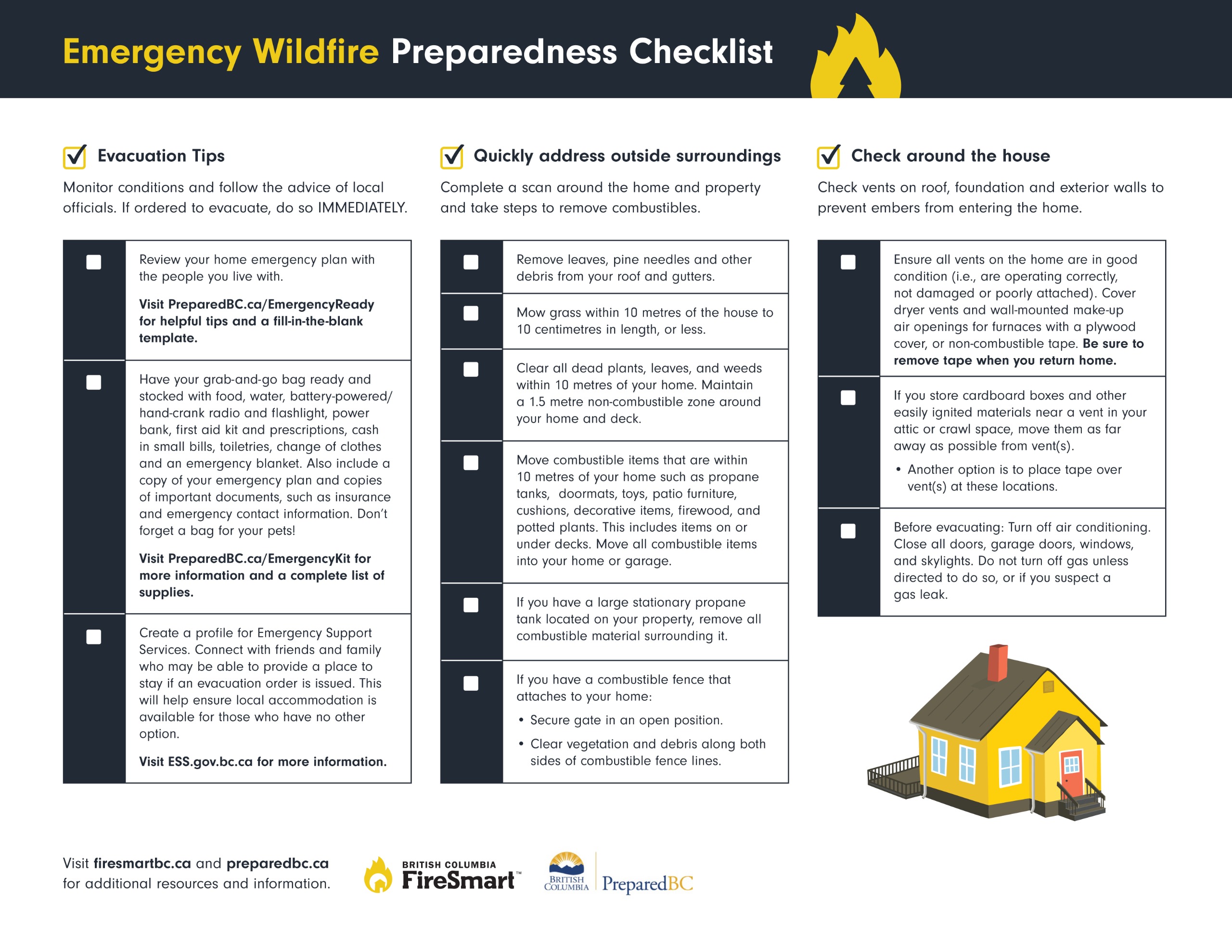
Credit: engage.rdek.bc.ca
Fire Risk Assessment
Assessing fire risk helps prepare for wildfire emergencies. It reduces damage and keeps people safe.
This assessment looks at local hazards and home weak points. It guides actions to lower fire risks.
Identifying Local Fire Hazards
Check your area for things that can start or spread fires. Know what makes wildfires more likely near you.
Look for dry vegetation, dead trees, and brush piles. Notice windy spots that can carry sparks fast.
- Dry grass and shrubs
- Dead or fallen trees
- Wood piles near homes
- Power lines and electrical equipment
- Areas with strong winds
- Previous wildfire zones
Evaluating Home Vulnerability
Check your house for weak spots that fire can reach easily. Look at building materials and nearby plants.
Inspect roofs, vents, and decks for flammable materials. Clear leaves and debris from gutters and yards.
- Roof and siding type
- Vents without screens
- Wooden decks and fences
- Plants close to the house
- Dry leaves and pine needles
- Gutters filled with debris

Credit: prophetriverfirstnation.com
Emergency Kit Essentials
Wildfires can spread quickly and cause damage in minutes. Being ready with an emergency kit helps keep you safe.
Your kit should have important supplies and documents. This guide shows what to include for wildfire safety.
Must-have Supplies
Gather items that help you survive for several days. Pack food, water, and tools for safety.
- Water: At least one gallon per person per day
- Non-perishable food: Canned goods and snacks
- First aid kit: Bandages, antiseptics, and medicines
- Flashlight and extra batteries
- Face masks to reduce smoke inhalation
- Portable phone charger
- Clothing: Sturdy shoes and protective gear
- Fire extinguisher
- Local maps and emergency contact list
Personal Documents And Valuables
Keep important papers and small valuables in a safe, easy-to-grab container. Protect these items from fire and water damage.
- Identification: Driver’s license, passport, and ID cards
- Medical records and insurance papers
- Bank account and credit card information
- House and car deeds or titles
- Emergency contact information
- Cash in small bills
- Photos or digital backups of important documents
Evacuation Planning
Wildfires spread fast and can be very dangerous. Planning your evacuation helps keep you safe. Know what to do before an emergency happens.
Good plans include clear escape routes and ways to communicate. This helps everyone leave safely and stay connected.
Creating Escape Routes
Make a list of at least two ways to leave your home. Roads may be blocked by fire or smoke. Having more than one route is safer.
Practice your escape routes with your family. Know where to meet if you get separated. Keep your car fueled and ready to go.
- Choose routes away from wildfire zones
- Check routes for traffic and road conditions
- Plan for pets and livestock in your escape
- Mark routes on maps and keep a copy handy
Communication Strategies
Decide how you will tell family and friends about your evacuation. Use phones, texts, or social media. Have backup plans if signals fail.
Set a meeting place outside the danger area. Make sure everyone knows how to reach it. Keep emergency contacts written down and stored safely.
- Share your evacuation plan with all family members
- Use group messages to update everyone at once
- Keep a battery-powered radio for emergency alerts
- Inform neighbors and check on those who need help

Credit: www.northumberland.ca
Home Protection Measures
Preparing your home for wildfires can reduce damage and keep your family safe. Simple changes make your house more fire-resistant.
Focus on the area around your home and the materials used in its construction. These steps help protect your property from flames.
Landscaping For Fire Safety
Keep plants and trees trimmed to stop fire from spreading. Clear dry leaves and dead plants regularly.
Create a safe zone by planting fire-resistant plants near your home. Use gravel or stone paths instead of wood chips.
- Trim tree branches at least 10 feet from the roof
- Keep grass cut short and watered
- Remove dead plants and leaves near the house
- Use fire-resistant plants like succulents and lavender
- Place gravel or stone mulch around the home
Installing Fire-resistant Materials
Use materials that resist fire for your roof, walls, and decks. These materials can slow fire and protect your home.
Check and replace old or damaged materials with fire-resistant options. This is an important step in wildfire areas.
- Choose Class A fire-rated roofing materials like metal or tile
- Use fiber-cement or stucco siding instead of wood
- Install tempered glass windows to resist heat
- Build decks with fire-resistant wood or composite materials
- Seal gaps to prevent embers from entering the home
Frequently Asked Questions
What Are Key Items For A Wildfire Emergency Kit?
Include water, non-perishable food, flashlight, batteries, first aid kit, medications, and important documents.
How Can I Create A Family Evacuation Plan?
Identify escape routes. Assign roles. Practice regularly. Ensure everyone knows the plan and meeting points.
Why Is Defensible Space Important Around Homes?
Defensible space reduces fire risk. It slows fire spread. It gives firefighters a safer area to work.
What Should I Do If Trapped By Wildfire?
Stay in a house or vehicle. Close doors and windows. Call for help. Stay calm and informed.
How Can I Stay Updated During A Wildfire?
Listen to local news. Use emergency apps. Follow official social media channels. Stay informed for safety.
Conclusion
Wildfires can spread quickly and cause great harm. Staying ready helps protect your family and home. Keep emergency supplies ready and know escape routes well. Clear dry brush and keep grass short near your house. Listen to local news for updates and warnings.
Practice your evacuation plan with all family members. Small actions can make a big difference during a wildfire. Stay calm and act fast to stay safe. Preparedness saves lives and reduces damage. Don’t wait—start your wildfire safety plan today.