

Last Updated on June 17, 2026
Imagine facing an emergency at home without the right supplies. Would you know where to start?
Having a well-stocked household emergency kit can make all the difference when every second counts. You might think it won’t happen to you, but being prepared means protecting your family and staying calm under pressure. You’ll discover exactly what essentials your kit needs to keep you safe and ready for any unexpected situation.
Don’t wait until it’s too late—read on to learn how to build a kit that gives you peace of mind.
Basic Survival Supplies
A household emergency kit helps you stay safe during disasters. It has supplies to meet your basic needs.
Focus on water, food, and first aid materials. These items keep you healthy and strong.
Water And Hydration
Water is the most important survival supply. You need clean water to drink and cook.
Store at least one gallon of water per person each day. Keep water in sealed containers.
- Bottled water
- Water purification tablets
- Portable water filter
- Extra water containers
Non-perishable Food
Choose foods that last long without refrigeration. They provide energy and nutrients.
Select easy-to-open items that do not need cooking. This saves time and fuel.
- Canned vegetables and fruits
- Peanut butter
- Granola bars
- Dried nuts and seeds
- Instant oatmeal packets
First Aid Materials
A first aid kit treats minor injuries and prevents infection. Include essential medical supplies.
Check your kit regularly and replace expired items. Keep the kit in an easy-to-reach place.
- Adhesive bandages in various sizes
- Antiseptic wipes and ointments
- Gauze pads and medical tape
- Scissors and tweezers
- Pain relievers like acetaminophen
- Disposable gloves
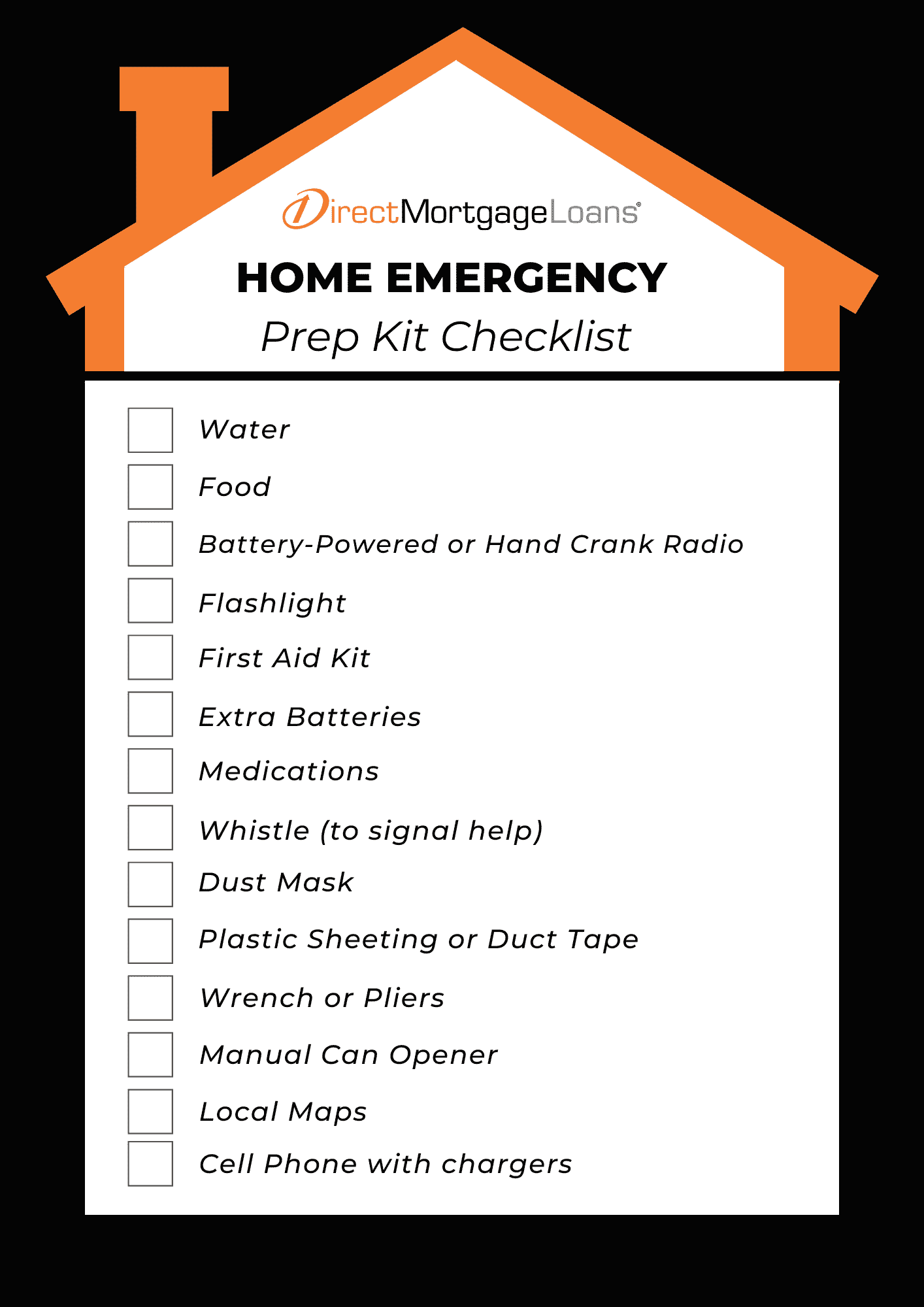
Credit: www.directmortgageloans.com
Tools And Equipment
A household emergency kit needs the right tools and equipment. These items help you stay safe and solve problems during an emergency.
Good tools make it easier to handle power outages, injuries, or other urgent situations at home.
Flashlights And Batteries
Flashlights provide light when the power goes out. Choose bright, durable models that are easy to hold.
Keep extra batteries of the right size. Check and replace batteries regularly to ensure they work in an emergency.
- LED flashlights last longer and use less power
- Store batteries separately to avoid damage
- Test flashlights monthly for working condition
Multi-use Tools
Multi-use tools combine many functions in one device. They save space and give you many options during an emergency.
Common tools include pliers, knives, screwdrivers, and scissors. Choose a sturdy model with a good grip.
- Look for tools with a safety lock
- Choose corrosion-resistant materials
- Practice using the tool before an emergency
Communication Devices
Communication devices help you get help or contact family during emergencies. Radios and phones are common choices.
A battery-powered or hand-crank radio keeps you informed. Keep extra phone chargers and power banks ready.
- Use a NOAA weather radio for alerts
- Keep a list of emergency contacts
- Have a backup power source for phones
Personal Care Items
Personal care items are important for comfort and health during emergencies. They help maintain hygiene and prevent illness.
Having these items ready can make tough situations easier to handle. Keep them in your emergency kit.
Hygiene Products
Hygiene products keep you clean and reduce the spread of germs. They help protect your health.
- Soap or body wash
- Hand sanitizer with at least 60% alcohol
- Toothbrush and toothpaste
- Feminine hygiene products
- Disposable wet wipes or baby wipes
- Toilet paper or tissues
- Small towel or washcloth
Medications And Prescriptions
Keep essential medicines in your kit. Include prescriptions and over-the-counter drugs.
Check expiration dates often and replace expired items. Include a list of your medications.
- Prescription medications in original containers
- Pain relievers like acetaminophen or ibuprofen
- Allergy medicine and antihistamines
- Antacids and digestive aids
- Bandages and antiseptic ointment
- Thermometer
Clothing And Blankets
Extra clothing and blankets keep you warm and dry. Choose items for all weather conditions.
Pack comfortable clothes that fit well. Include socks and sturdy shoes if possible.
- Seasonal clothes (jackets, hats, gloves)
- Extra underwear and socks
- Comfortable long-sleeve shirts and pants
- Blankets or sleeping bags
- Rain poncho or waterproof clothing

Credit: trueprepper.com
Important Documents And Extras
Having important documents and extra supplies ready is key in an emergency kit. These items help you prove your identity and meet special needs.
Keep these items safe and easy to access. They can make a big difference during a crisis.
Copies Of Identification
Keep photocopies of your ID cards, passports, and driver’s licenses. These copies help prove who you are if originals get lost.
Store these copies in a waterproof bag or container to protect them from damage.
- Driver’s license
- Passport
- Birth certificate
- Social security card
- Health insurance cards
Emergency Cash
Keep some cash in small bills in your emergency kit. ATMs and banks may not work during power outages.
Cash helps buy food, gas, or other items when electronic payments are unavailable.
- Small bills like $1, $5, and $10
- Store cash in a sealed waterproof pouch
- Keep enough for basic needs for a few days
Special Needs Supplies
Include extra supplies for family members with special needs. These items help maintain health and comfort during emergencies.
Think about medications, medical devices, and other personal items needed daily.
- Prescription medications with copies of prescriptions
- Glasses or contact lenses and solution
- Hearing aids with spare batteries
- Infant formula, diapers, and baby supplies
- Mobility aids like canes or wheelchairs

Credit: firstrespondersfoundation.org
Frequently Asked Questions
What Should Be In A Household Emergency Kit?
A household emergency kit should include water, non-perishable food, flashlight, batteries, first aid kit, and a whistle.
How Much Water Is Needed In An Emergency Kit?
Keep at least one gallon of water per person per day for three days.
Why Is A First Aid Kit Important In Emergencies?
A first aid kit helps treat minor injuries. It can prevent infections and complications.
How Often Should I Update My Emergency Kit?
Check and update your emergency kit every six months. Replace expired items.
Can I Personalize My Emergency Kit?
Yes, personalize it based on family needs. Include medications, baby supplies, or pet items.
Conclusion
A household emergency kit keeps your family safe and prepared. Simple items can make a big difference in tough times. Check your kit often and replace old supplies. Store it where everyone can find it quickly. Being ready helps reduce stress during emergencies.
Start building your kit today for peace of mind. Safety begins with small steps taken now. Don’t wait until an emergency comes. Preparedness is key to protecting your loved ones. Keep your home ready and stay calm when it matters most.