

Last Updated on June 17, 2026 by Blake Turner
Imagine a sudden emergency striking your home—how ready are you and your family to handle it? Having a Family Emergency Preparedness Plan isn’t just a good idea; it can make all the difference when every second counts.
This plan puts you in control, giving you clear steps to protect your loved ones and reduce panic. Keep reading to discover simple, practical ways you can create a plan that keeps your family safe no matter what happens. Your peace of mind starts here.
Credit: vermont211.org
Assessing Family Risks
Being prepared for emergencies is important for every family. Assessing risks helps you plan better. Knowing potential dangers can keep your loved ones safe.
Understanding your family’s unique risks is the first step. This involves looking at local hazards and family vulnerabilities. With this knowledge, you can create a plan that works for everyone.
Identifying Local Hazards
Every area has its own dangers. Learn about the common risks where you live. This helps you prepare for events that may happen.
- Floods can occur in low-lying areas
- Earthquakes may happen near fault lines
- Tornadoes are common in certain regions
- Wildfires can threaten homes near forests
Evaluating Family Vulnerabilities
Each family has different needs during an emergency. Look at what makes your family unique. This helps in creating a specific plan.
Consider ages, health conditions, and special needs. Pets and transportation options should also be part of your plan. Knowing these factors helps you prepare better.
- Young children may need extra supplies
- Elderly members might require special medications
- Pets need food and shelter during emergencies
- Access to transportation is key for evacuation
Credit: www.checklistinn.com
Creating Communication Plans
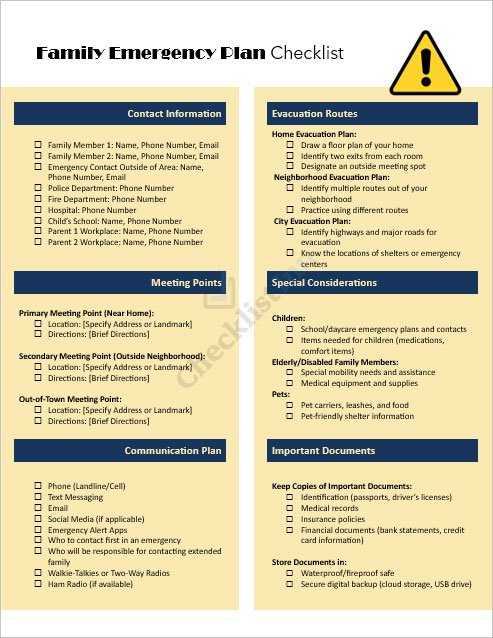
A family emergency plan helps everyone stay safe and informed. Good communication is key to this plan.
Having clear ways to talk and share information keeps your family connected during emergencies.
Establishing Contact Methods
Decide how your family will communicate during an emergency. Use different ways to be sure messages get through.
Phones, text messages, and apps can all help. Choose what works best for your family.
- Use cell phones for calls and texts
- Try messaging apps like WhatsApp or Signal
- Have a landline phone if possible
- Use email for longer messages
- Set a time to check in regularly
Designating Emergency Contacts
Pick one or more people outside your home as emergency contacts. They can help share information between family members.
Choose someone who lives far away. This helps if local phone lines are busy.
- Choose a neighbor or close friend
- Pick a family member in a different city
- Make sure everyone knows their contact details
- Keep a written list of emergency contacts
Preparing Emergency Supplies
Preparing emergency supplies is important for family safety. It helps you stay ready for unexpected events.
Having the right supplies can make tough times easier. Focus on what your family needs most.
Building A Go-bag
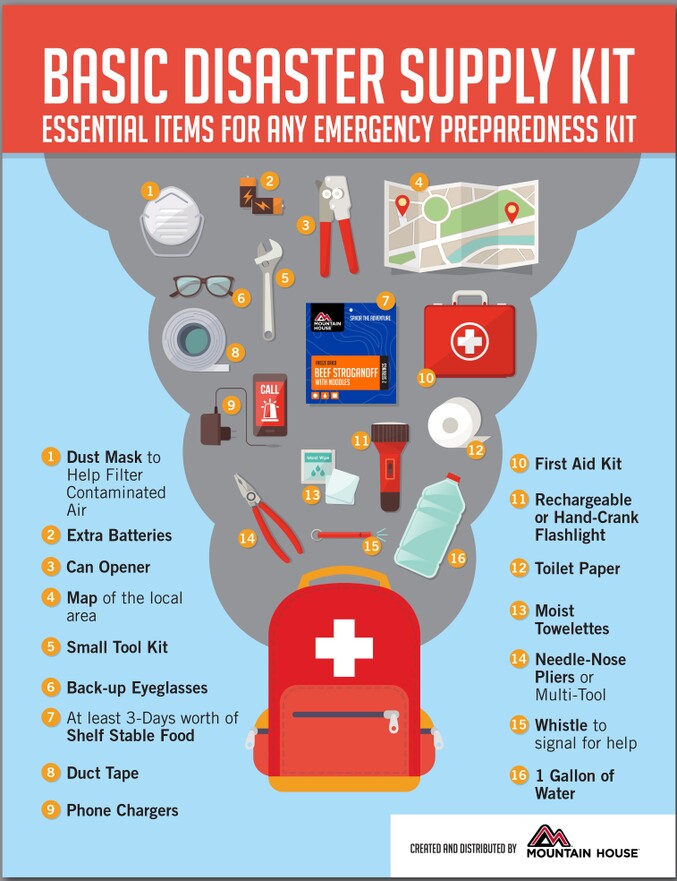
A go-bag is a small kit with essentials for quick escape. Keep it ready in case you must leave fast.
Include items that help you stay safe and comfortable for 72 hours. Make sure everyone in the family has what they need.
- Water – one gallon per person per day
- Non-perishable food – snacks and meals
- Flashlight with extra batteries
- First aid kit with medicines
- Copies of important documents
- Change of clothes and sturdy shoes
- Personal hygiene items
- Multi-tool or small knife
- Phone charger and power bank
- Cash in small bills
Stocking Home Essentials
Stock your home with supplies to use during emergencies. This helps your family stay safe without leaving home.
Keep enough items to last at least three days. Check and replace items regularly to keep them fresh.
- Water – at least one gallon per person per day
- Non-perishable food – canned goods, dry foods
- Manual can opener
- Battery-powered or hand-crank radio
- Extra blankets and warm clothing
- Basic first aid supplies
- Sanitation and hygiene products
- Flashlights and extra batteries
- Cleaning supplies and disinfectants
- Pet food and supplies if needed
Practicing Emergency Drills
Practicing emergency drills helps your family prepare for real dangers. It builds confidence and teaches quick actions.
Regular drills make sure everyone knows what to do. This lowers fear and confusion during an emergency.
Planning Evacuation Routes
Plan several safe ways to leave your home. Choose routes that avoid dangerous areas and are easy to follow.
Practice these routes with your family often. Make sure each person knows where to meet outside the house.
- Identify at least two exits from every room
- Choose a safe meeting spot outside your home
- Consider routes for different emergencies like fire or flood
- Check for obstacles that may block the way
Reviewing Safety Procedures
Go over safety steps for fires, earthquakes, or other hazards. Make sure everyone understands what to do.
Teach children how to use emergency numbers and where to find safety supplies. Keep the plan clear and simple.
- Know how to turn off gas, water, and electricity
- Practice “stop, drop, and roll” for fire safety
- Learn how to stay calm and help others
- Update your plan as your family changes
Credit: www.fullertonsd.org
Frequently Asked Questions
What Is A Family Emergency Preparedness Plan?
A family emergency preparedness plan helps families stay safe during disasters or unexpected events.
How Do I Create A Simple Emergency Plan?
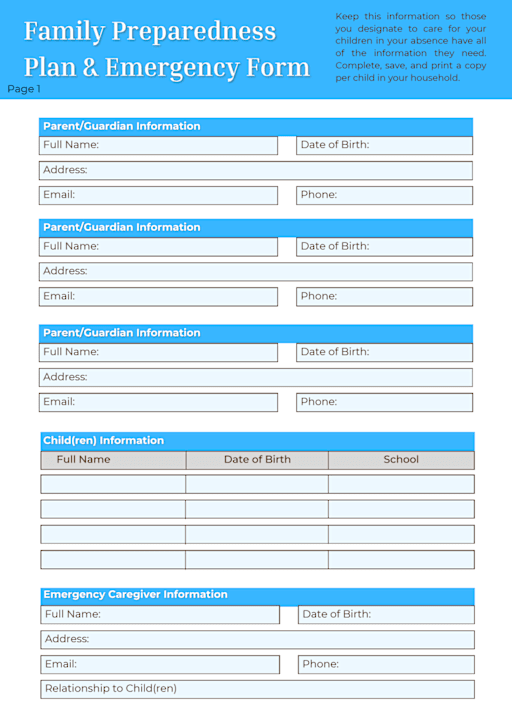
List important contacts, meeting spots, and emergency supplies for quick access.
What Items Should Be In An Emergency Kit?
Include water, food, first aid, flashlight, batteries, and important documents.
How Often Should We Practice Our Emergency Plan?
Practice your plan at least twice a year to ensure everyone knows what to do.
Why Is Communication Important In Family Emergency Plans?
Clear communication helps family members stay connected and safe during emergencies.
Conclusion
Preparing a family emergency plan protects your loved ones. It helps everyone know what to do and where to go. Practice the plan often so it feels natural. Keep important items ready and update your plan regularly. Being ready reduces fear and confusion during a crisis.
Small steps today can make a big difference tomorrow. Stay calm, stay safe, and take action now. Your family’s safety depends on your preparation.